A buyer in Teaneck gets the inspection report back and jumps straight to the radon number. It's above 4.0. Their stomach drops. They start drafting a message to their agent about walking away.
Meanwhile, three miles over in Englewood, a different buyer skims past a line item about "possible fill pipe observed near foundation" because it's buried in page 22 of a 40-page report and doesn't sound as alarming as a word tied to cancer risk. That's the finding that should have stopped them cold.
This is backwards, and it's costing Bergen County buyers and sellers real money and real time. The scary-sounding problem is usually the cheap one. The boring-sounding problem is the one that can unravel a closing.
Two findings, two very different risks
Here's what actually separates a routine negotiation from a deal that falls apart.
| Radon | Underground oil tank | |
|---|---|---|
| How common in Bergen County | Elevated levels above the EPA's action level show up in a meaningful share of homes across Passaic, Somerset, and parts of Bergen County | Common in homes built before roughly 1975, when oil heat was the standard before natural gas lines reached most towns |
| Typical fix cost | A sub-slab depressurization system runs roughly $800 to $1,500 installed | A standard removal with no contamination runs $1,500 to $3,500 in 2026, but that number changes fast if the tank has leaked |
| Does it usually end the deal | Almost never. It's treated as a routine credit or repair item | Sometimes, especially if soil or groundwater contamination is confirmed |
| State-mandated disclosure | No New Jersey law requires sellers to test for radon or disclose results, though the standard disclosure form asks about known environmental hazards | New Jersey's standard seller disclosure form asks directly whether an underground storage tank is present or was ever present |
| Testing cost | Roughly $100 to $200 for a certified test | A tank sweep using ground-penetrating radar and a magnetometer typically runs a few hundred dollars |
The pattern in that table is the whole story. Radon is common, cheap to fix, and legally optional to even disclose in most cases. An oil tank is the one item tied to open-ended environmental liability, and it's the one New Jersey's own disclosure form asks about by name.
Why Bergen County carries more of this risk than newer markets
Bergen County has some of the oldest housing stock in northern New Jersey. Towns like Leonia, Englewood, Tenafly, and Teaneck have large numbers of homes built before natural gas lines reached most residential blocks, which means oil heat was standard for decades before homeowners converted. When a furnace switched from oil to gas, the tank underneath the yard or driveway didn't always come with it. If a house was built before roughly 1975, there's a real chance a tank is still down there whether or not anyone currently living in the house knows about it.
That's the mechanism that makes this different from most home inspection findings. A cracked driveway or an aging roof is a known, visible cost. A buried tank is an unknown one. It might have been decommissioned properly decades ago with paperwork nobody kept. It might never have leaked. Or it might have been quietly corroding for forty years. Nobody knows until someone looks, and state regulations plus practical lender and title insurer requirements mean someone always ends up looking eventually, usually right in the middle of a transaction.
The timing problem nobody mentions in August
Here's the part that matters specifically right now. New Jersey's Department of Environmental Protection recommends testing for radon during the heating season, when windows are closed and the house is sealed up tight. That's when radon concentrations peak and testing produces the most representative number.
A home going under contract in Bergen County in August is being tested in exactly the wrong season for an accurate radon reading. Windows are open, air conditioning is cycling, and the natural ventilation that comes with summer weather can pull a short-term test result artificially low. A buyer who gets a clean radon number in August isn't necessarily getting a full picture. They might be getting a number that would look different in January.
An oil tank doesn't care what season it is. A ground-penetrating radar sweep finds a buried tank in July exactly as well as it finds one in January. So the finding that's actually less reliable to test for right now, radon, is the one buyers tend to fixate on, while the finding that's just as testable in any month, the tank, is the one that gets treated as an afterthought.
What this means if you're listing this fall
If you're preparing to sell an older home in Bergen County, the practical move is to get ahead of the tank question before a buyer's inspector does. New Jersey's process gives buyers a mandatory three-business-day attorney review period after a contract is signed, followed by an inspection window that typically runs another 10 to 14 days. That's not much runway if a tank sweep turns up something unexpected in the middle of it. A seller who orders a pre-listing sweep, and keeps any old decommissioning paperwork on hand, walks into a negotiation with documentation instead of surprises. A seller who waits finds out about the problem at the same moment the buyer does, usually with far less leverage to manage the conversation calmly.
If your home has never used oil heat, or you already have documentation that a tank was properly removed years ago, that paperwork is worth pulling out and keeping with your listing file. It answers the question before a buyer's attorney has to ask it.
What this means if you're under contract right now
If you're buying in Bergen County and your inspection report comes back with an elevated radon number, that's usually a conversation about a $800 to $1,500 mitigation system, not a reason to walk. Ask for the credit or the repair and move forward.
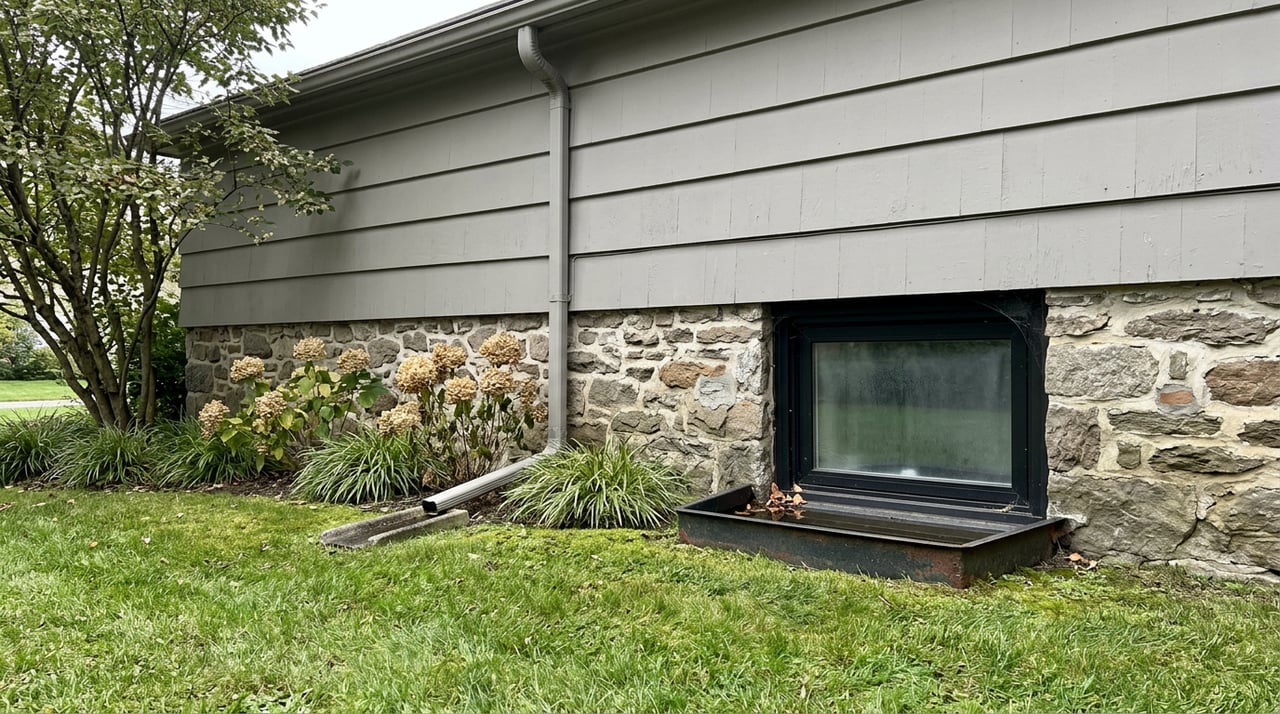
If the same report mentions any sign of a former oil system, a fill pipe, a vent stack, patched concrete near the foundation, that's worth a dedicated tank sweep before your inspection contingency closes. It's a modest added cost during your inspection period, and it's the one line item that can turn into a five-figure conversation if it's skipped and discovered after closing instead of before.
A few questions worth asking directly
Does every older home in Bergen County have a buried oil tank? No. Many were removed properly when owners converted to gas. But homes built before roughly 1975 have a meaningfully higher chance, and there's no way to know for certain without a sweep or documented history.
If my radon test comes back high in August, should I retest later? If the number is close to the 4.0 threshold, a longer follow-up test after moving in can give a more accurate annual picture, since short-term summer tests can run lower than winter conditions. If the number is clearly elevated even in summer, that's still worth addressing regardless of season.
Can a seller refuse to deal with a tank that's found during inspection? A seller isn't required to fix every issue an inspection turns up, but a buyer generally has the right to walk away under the inspection contingency if the seller won't reasonably address a genuine environmental question. In practice, most sellers choose to handle it rather than lose the sale, since the tank becomes a disclosure item for the next buyer too.
If you're weighing a purchase or a listing anywhere in Bergen County and want a second set of eyes on what a specific inspection report actually means for your timeline, I'm happy to walk through it with you. Reach out through Raquel Pena to get a free home valuation and a straight answer about what to expect next.